What Is a HUD Loan, and Can It Help You Buy in Farmington?
People say "HUD loan" when they mean several different things, so here is what the term usually covers and what it means for a buyer.
What is a HUD loan?
A HUD loan is almost always an FHA loan: a mortgage from a regular lender that the Federal Housing Administration, part of HUD, insures. HUD does not lend you the money. The insurance lets lenders accept a smaller down payment and lower credit scores, in exchange for mortgage insurance and a stricter look at the property. Questions? (209) 290-9481
Who actually lends the money?
Your loan comes from a bank, credit union or mortgage company that is approved to make FHA loans. You make your payments to them, not to the government. The FHA steps in only if a borrower stops paying, and then it covers the lender's loss.
That backing is the whole point. Because the lender carries less risk, it can say yes to buyers it might turn down for a conventional loan. It also means not every lender offers FHA loans, and the ones that do can set their own rules on top of the federal minimums. It is worth asking two or three lenders the same questions and comparing the answers.
What makes an FHA loan different from a regular mortgage?
The biggest difference is the down payment. Under HUD rules, a buyer with a credit score of 580 or higher can put down as little as 3.5 percent. Scores between 500 and 579 need 10 percent down. Lenders often ask for more than the floor, so treat those numbers as the starting line.
The trade-off is mortgage insurance. You pay an upfront premium, which is usually rolled into the loan, plus a yearly premium split into your monthly payment. On many FHA loans that monthly charge stays for the life of the loan unless you refinance into another type later. Ask the lender to show you the payment with and without it so you can see the real cost.
- Smaller down payment than most conventional loans
- More room for lower credit scores and past credit trouble
- Gift money from family can cover the down payment, with paperwork
- Mortgage insurance is required, upfront and monthly
- The house must be your main residence, not a rental or second place
- Loan amounts are capped by county limits that HUD sets each year
Why does the house itself matter so much?
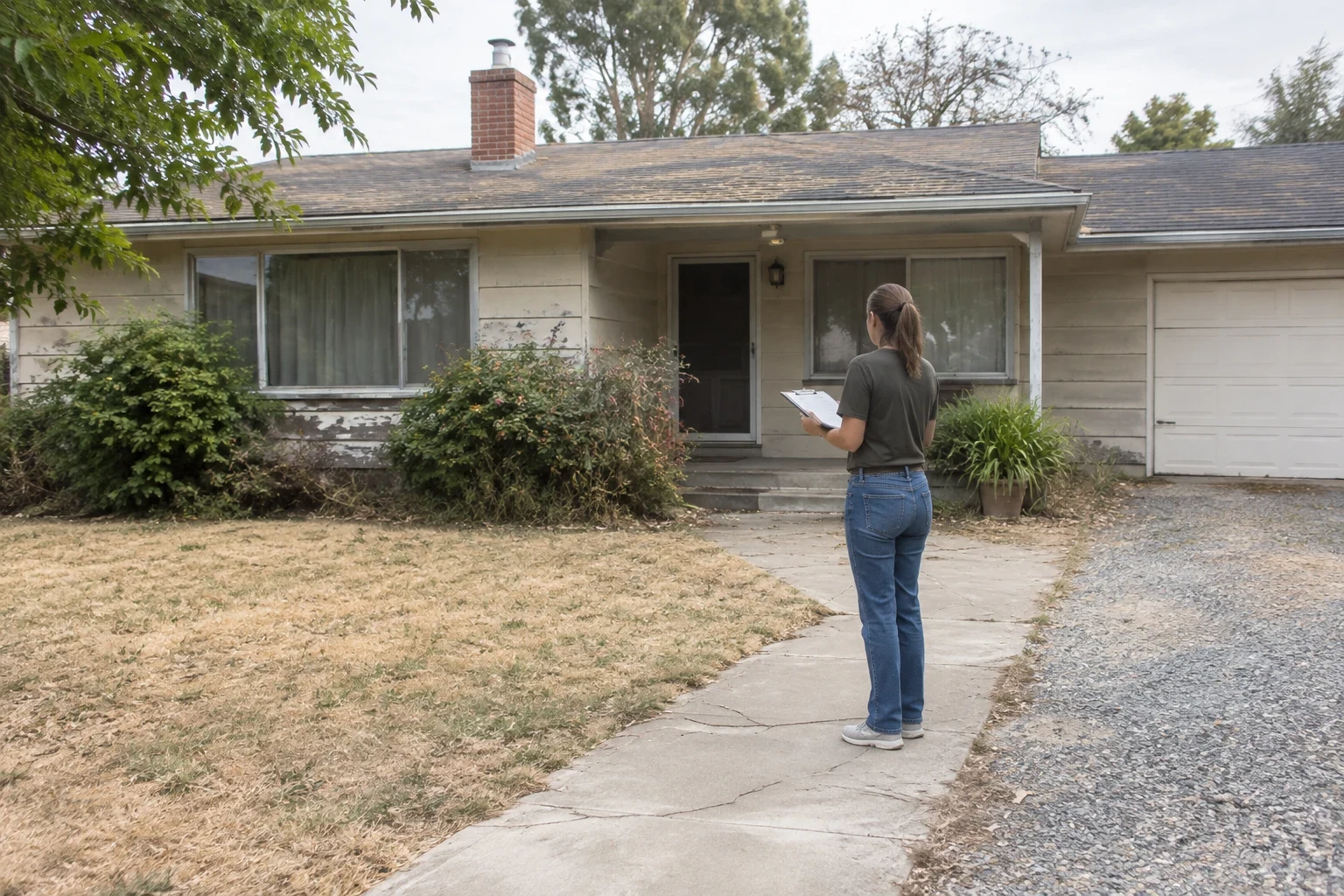
An FHA appraisal does two jobs. It checks the value, and it checks that the house is safe, sound and livable. The appraiser looks for things like a roof with life left in it, working heat and plumbing, safe electrical, and no peeling paint on older houses built before 1978.
If something fails, it usually has to be fixed before closing. That is where deals can stall. Around Farmington, plenty of properties sit on larger rural lots with a private well or septic system, and the lender may want water testing or proof the system works. We like to know about those items early so nobody is surprised two weeks before closing.
If the house needs real work, there is an FHA version called the 203(k) loan that rolls repair costs into the mortgage. It takes more paperwork and a contractor's bid, but it can open up houses a standard FHA loan would not cover.
Other things people mean by "HUD"
Sometimes people say HUD loan and mean something else. A "HUD home" is a house HUD owns after an FHA borrower lost it. Those are sold through a separate bidding process, and you can buy one with any type of loan, not just FHA. A HUD reverse mortgage, called a HECM, is for people 62 and older who want to draw on the value of a house they already own. That one is not for buying in the usual way.
When you talk to a lender, use the plain name of what you want: an FHA purchase loan, a 203(k) loan, or help bidding on a HUD-owned house. You will get a clearer answer faster.
Is an FHA loan the right choice for you?
It often fits first-time buyers, people rebuilding credit, and anyone without a big down payment saved. It can be a weaker fit if you have strong credit and 10 to 20 percent down, since a conventional loan may cost less over time without the lasting mortgage insurance.
The type of loan also affects how sellers read your offer. Some sellers worry about the stricter appraisal. A clean, well-prepared offer with a lender who answers calls goes a long way. Part of our home buying help is walking you through how your offer will look on the other side of the table, so you can write it with that in mind.
More questions about HUD and FHA loans
Can I use an FHA loan more than once?
Yes. You can get another FHA loan later, but usually you can only have one at a time, and the house still has to be your main residence.
Can the seller help with my closing costs?
FHA rules let a seller pay part of a buyer's closing costs, up to a set share of the price. It has to be written into the purchase agreement, so bring it up before you make the offer.
Does a condo work with an FHA loan?
Only if the condo project is approved by the FHA or qualifies for a single-unit approval. Ask your lender to check before you fall for a specific unit.
How long does an FHA loan take to close?
Often about the same as a conventional loan. Repairs flagged by the appraiser are the most common cause of delays.
Talk through your loan options before you shop
Call us and we will go over how an FHA loan would shape your search, your offer and the houses worth a closer look around Farmington. You will hang up knowing what to ask your lender next.